A dropping pool level sends a lot of Cape Town homeowners into a panic about a leak, when the culprit is often just our climate. Evaporation is real and can be surprisingly fast here. So before you assume the worst, here is how to tell whether your pool is genuinely leaking or simply doing what every open body of water does in the Western Cape sun and wind.
How much evaporation is normal?
In Cape Town, a pool can lose 3 to 5mm of water a day to evaporation in summer, and sometimes more on a hot, windy day. Wind is the big accelerator here: the south-easter strips moisture off the surface far faster than still air would. Over a week, normal evaporation can add up to a couple of centimetres, which looks alarming if you are not expecting it.
Factors that speed up evaporation
- Wind — the single biggest factor in the Cape.
- Heat and direct sun on an uncovered pool.
- Low humidity, which lets the air absorb more moisture.
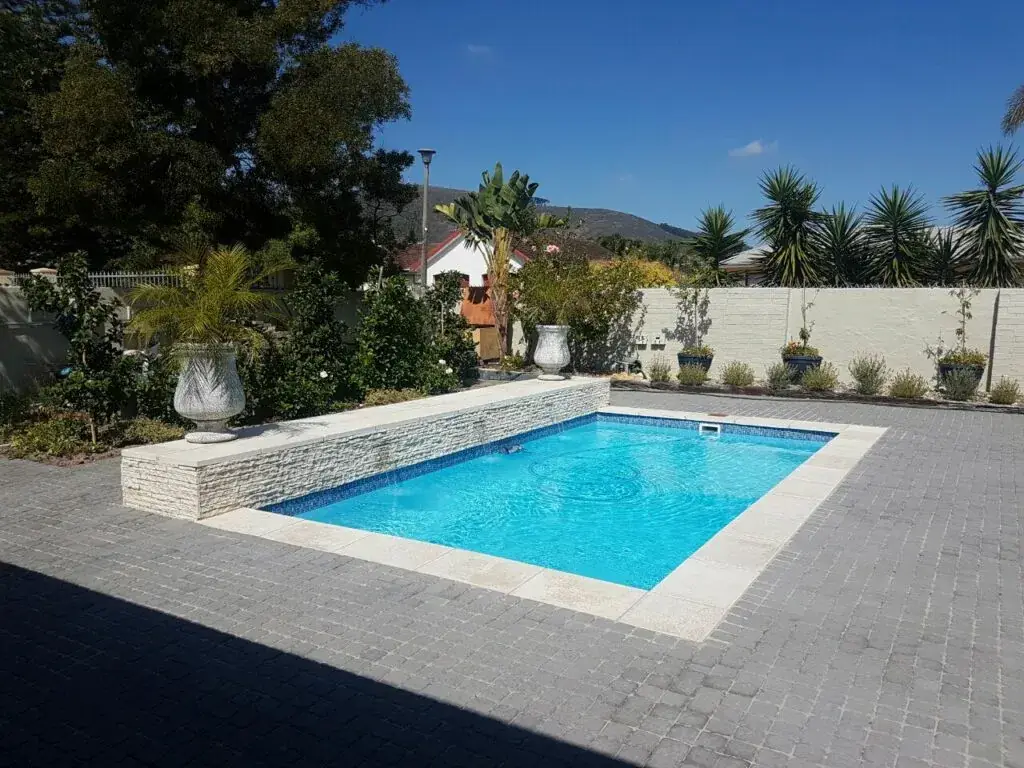
- Water features like fountains and spillways, which expose more surface area.
- An uncovered pool — a cover dramatically cuts evaporation overnight.
Signs it is evaporation, not a leak
Evaporation tends to be steady and predictable. The level drops a little each day, faster in hot windy weather and slower when it is cool or overcast. There are no damp patches in the garden, no air in the system, and the water loss eases off when you put a cover on. If the bucket test shows the pool and bucket dropping together, it is evaporation.
Signs it is a genuine leak
A leak behaves differently. The tell-tale signs include:
- Water loss that continues even in cool, still or wet weather.
- Damp patches, soggy soil or unexplained lush grass near the pool.
- Air bubbles coming from the return jets.
- A sudden spike in your chemical and water bills.
- Cracks appearing at the waterline tiles or steps.
Evaporation is steady and weather-driven. A leak keeps taking water even when the weather says it should not.
The test that settles it
The bucket test is the definitive home check: a bucket of pool water evaporating beside the pool gives you a direct comparison. If the pool drops faster than the bucket, the difference is your leak. It is simple, free and worth doing before you call anyone out.
If it is a leak
Confirming a leak is one thing; finding it is another. The source could be in the shell, the plumbing, the skimmer or the light niche, and locating it precisely takes specialist equipment rather than guesswork. Catching it early keeps the repair small, because a slow leak left alone gradually undermines the structure around your pool.
Suspect a leak? We find the leaks other companies can't.
Pool Leak Detection →Frequently asked questions
Need Help With Your Pool?
15+ years of pool expertise across the Western Cape. Leak detection is what we're known for. Get a free, no-obligation quote.
Get a Free Quote